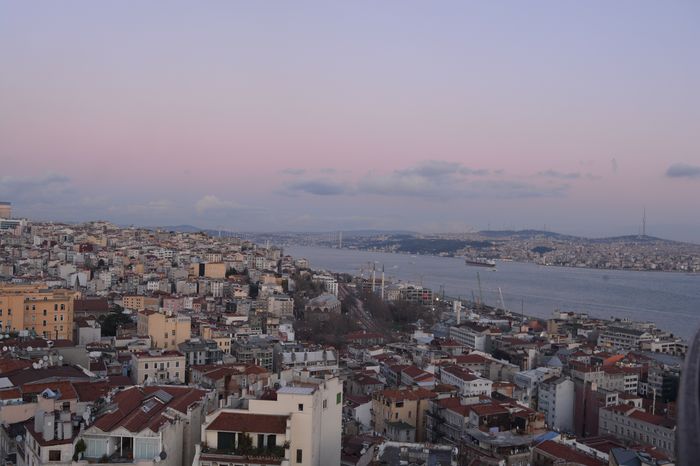
The Palace of Bucoleon is mentioned for the last time in Byzantine history during the final fall of Constantinople. According to the historian Phrantzes, “Peter Guliano, consul of the Catalans, was entrusted with the defense of the Bucoleon quarter and the districts reaching as far as the neighborhood of the Kontoscalion.” This reference shows that even in its final days, Bucoleon remained an important part of the city’s defensive network. Its strategic location along the Sea of Marmara made it a key area to defend during attacks on the city Customized Tour Istanbul.
The Harbours on the Sea of Marmara
Constantinople’s harbours played a central role in its economic and military life. Among these, the New Harbour, also called Portus Novus, the Harbour of Julian (Portus Divi Juliani), and the Harbour of Sophia (Portus Sophiae), has a rich history. This harbour was located about 327 yards west of the Church of SS. Sergius and Bacchus. It extended inland to the foot of the steep slope above which the Hippodrome was built.
The Turkish name for this area, Kadırga Limanı, meaning “Harbour of the Galleys,” indicates the long-standing use of this site for naval purposes. By the time the traveler Gyllius visited Constantinople, the port had been partially enclosed by walls and almost filled in. However, a pool of water remained, where local women washed clothes. It was said that submerged triremes—ancient warships—could sometimes be seen at the bottom of this pool, showing the port’s historical importance for the Byzantine navy.
Names and Origins of the Harbour
The harbour had three main names, reflecting its long history. It was first called Portus Novus when it was newly opened in the fourth century. This distinguished it from the city’s older harbours. Later, it was named in honor of Emperor Julian, who had constructed it, and Empress Sophia, who restored it when it fell into decay. These names highlight the continuous use and maintenance of the harbour over centuries, as well as the influence of imperial patronage in shaping the city’s infrastructure The Palace of Bucoleon and Its Historical Context.
The Importance of the Harbour
The New Harbour was not only a commercial hub but also had strategic military value. Its proximity to the Bucoleon Palace and the Sea of Marmara made it essential for controlling access to the southern coast of Constantinople. Like the Bucoleon itself, the harbour was a symbol of Byzantine urban planning, linking defensive architecture with maritime facilities. Even as the city approached its fall, these harbours continued to be vital for both trade and defense.
In conclusion, the Bucoleon and the New Harbour reflect the strategic and historical significance of Constantinople’s southern coast. Bucoleon was a defensive key during the final siege, while the harbour served as a vital link for trade, naval operations, and urban life. The multiple names of the harbour—Portus Novus, the Harbour of Julian, and the Harbour of Sophia—remind us of the long history and careful maintenance that kept Constantinople thriving for centuries.